Right now robotics gives more to quantum than it gets back
Automated laboratories running fabrication and characterisation are accelerating quantum device work today, while the return trip remains hypothetical.
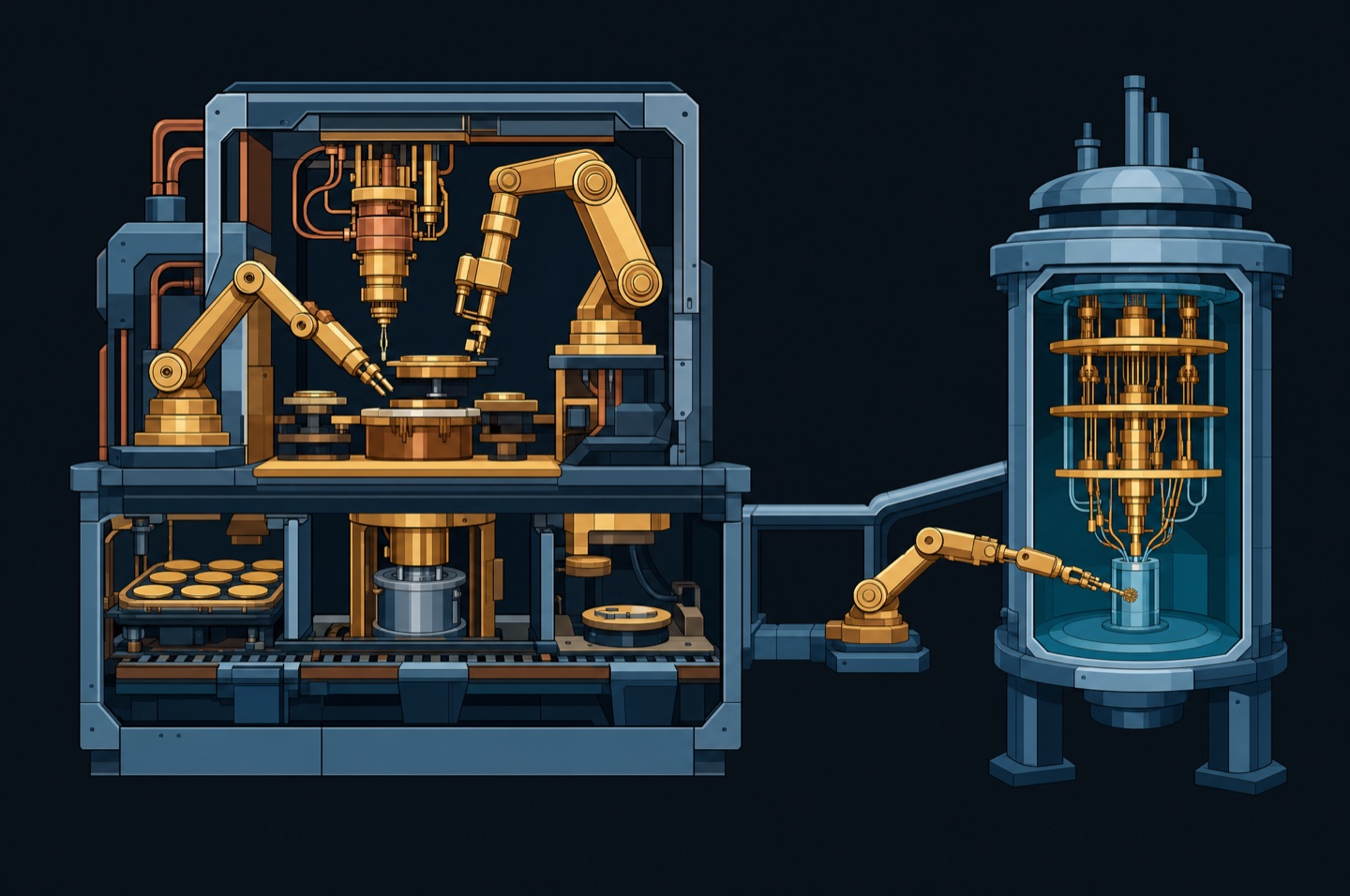
The flow of value between these fields is currently one-directional, and it runs from robotics into quantum rather than the other way around.
Building quantum devices is an experimental slog: fabricate, cool, characterise, tune, discard, repeat. Much of it is tedious, repetitive and exactly the shape of work that automated experimentation handles well — robotic sample handling, automated measurement, and a decision layer proposing the next experiment from what the last one returned. Calibration in particular is a large, high-dimensional tuning problem that consumes a great deal of skilled human time and responds well to being automated.
That is a real contribution from the robotics and machine learning side, and it is happening now. The return trip — quantum computation producing something that materially improves a robot — is the long materials chain, and it has not arrived.
The asymmetry is worth naming because the popular framing runs the other way, treating quantum as the powerful upstream technology and robotics as the eventual beneficiary. For the next several years the arrow points the other direction, and anyone planning at this intersection should plan for that rather than for the version in the press release.