Machine learning found a job inside the quantum stack, and it is decoding
Error correction needs a classical inference engine running under a microsecond budget. That is a latency problem the ML community already knows how to think about.
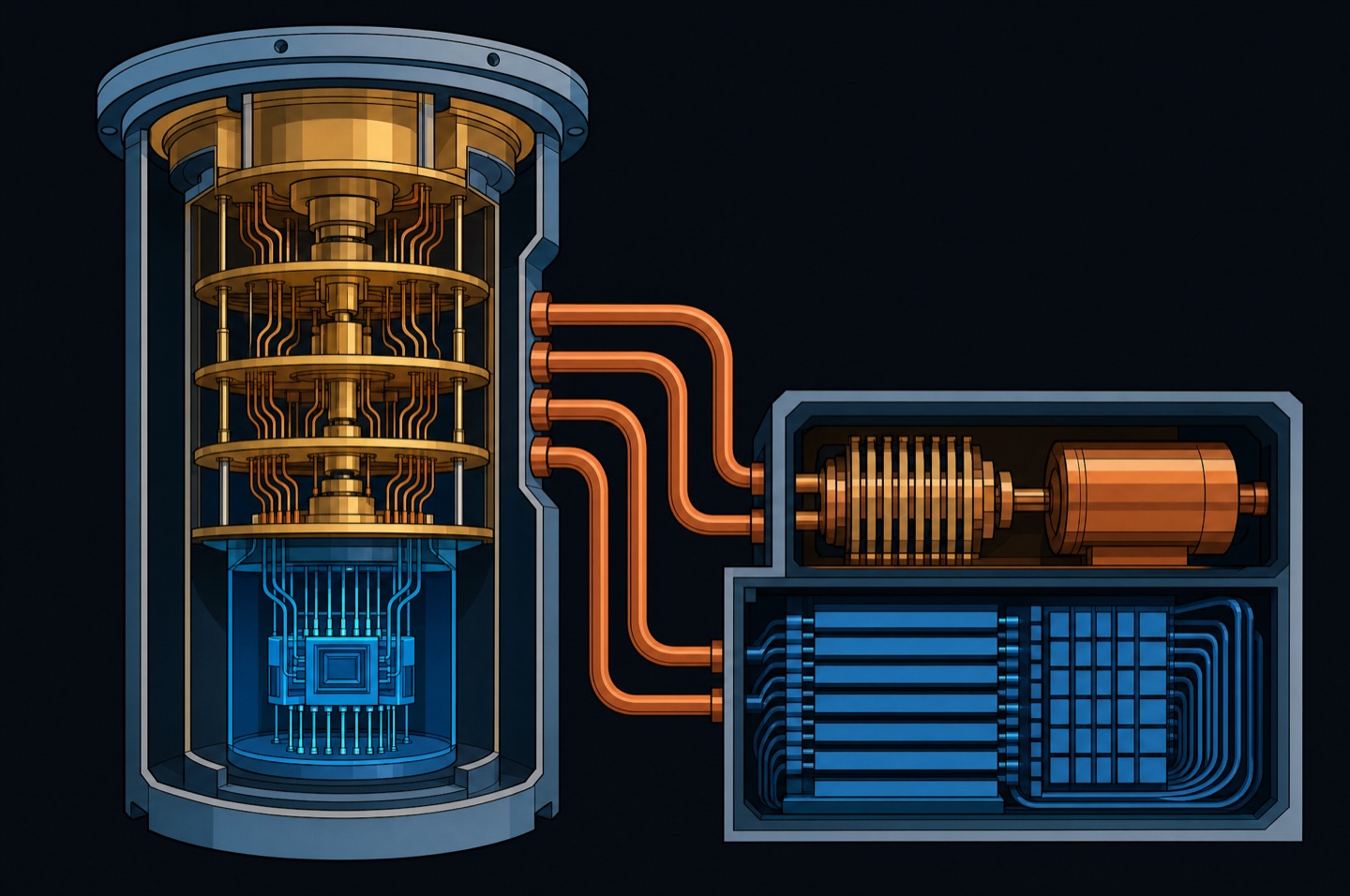
Quantum error correction works by measuring stabilisers rather than qubits — extracting a stream of syndrome data that says something went wrong nearby without saying what the encoded state is. Turning that stream into a correction is a decoding problem, and it is classical, which is the part people miss.
It is also a real-time problem. Syndrome rounds arrive continuously, and the decoder has to keep up or the backlog grows without bound. That puts a hard latency budget on a classical inference step sitting in the middle of a quantum machine, which is a strange and rather beautiful place for a piece of conventional computing to end up.
Matching-based decoders are the well-understood baseline and they have the enormous advantage of being analysable. Learned decoders are attractive because real devices have correlated, drifting, device-specific noise that an idealised model does not capture, and a network can absorb that structure from calibration data. The tension is the usual one: the learned system may be more accurate on the device it saw and less predictable on the device it did not.
What makes this the most concrete link between the AI and quantum fields is that it is not analogical. It is not "AI will accelerate science" in the abstract. It is a specific inference workload, with a specific latency target, on specific hardware, where the tooling and the intuitions of low-latency machine learning transfer directly. If you want to watch the two fields actually touch, watch here rather than at quantum machine learning.