Embodiment is a data problem, and quantum computing does not solve data problems
The bottleneck in robot learning is contact with the world. No amount of compute of any kind manufactures interaction that never happened.
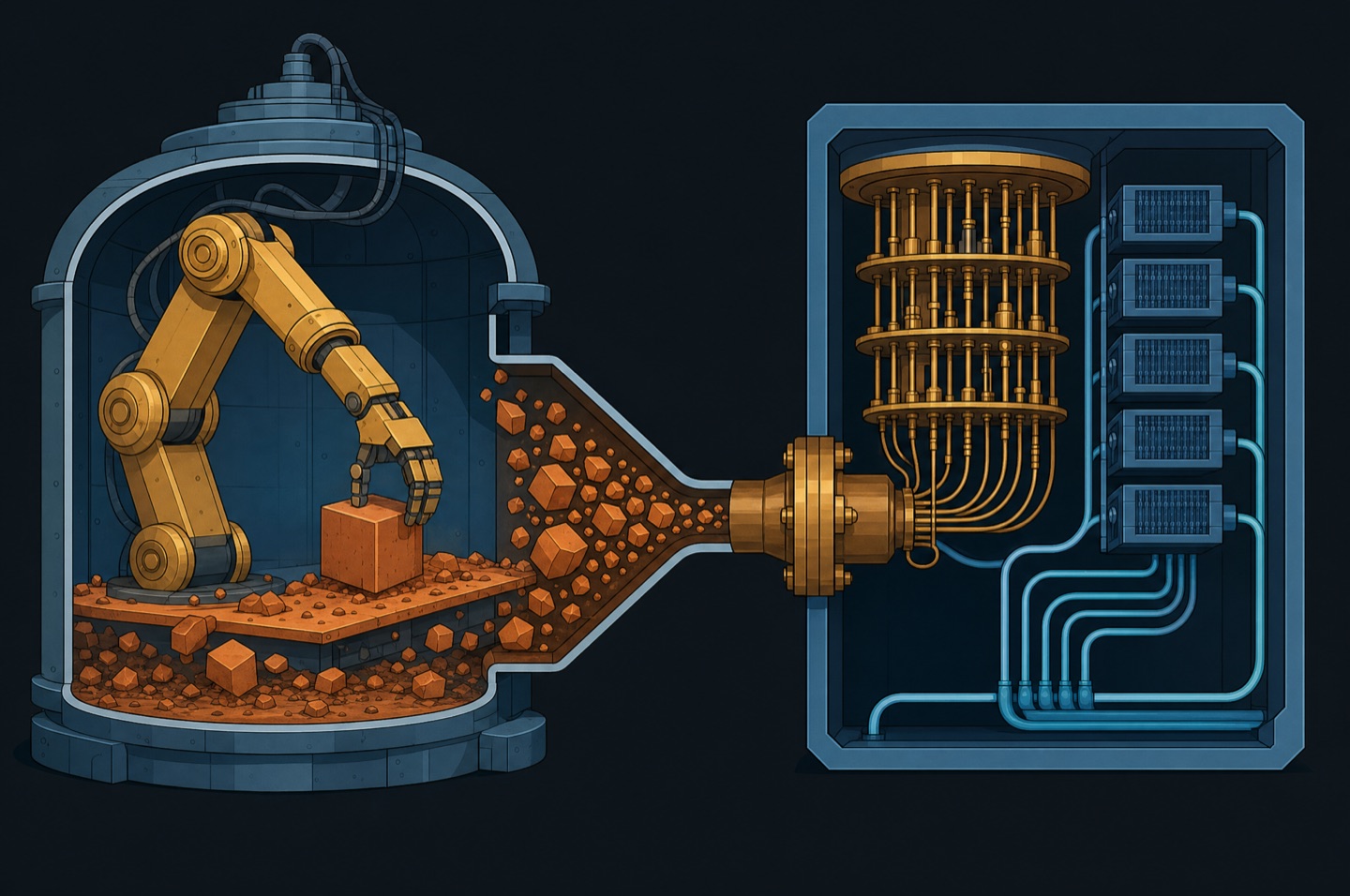
Language models had an enormous corpus waiting for them. Robotics does not. Every unit of robot experience has to be produced by a physical machine acting in a physical environment, in real time, with wear, breakage, supervision and safety attached to it. That is the constraint the field is actually up against.
Simulation is the obvious response and a genuinely powerful one, but it relocates the difficulty rather than removing it. Contact dynamics, friction, deformable materials and sensor noise are precisely where simulators are least faithful, and precisely what manipulation depends on. Domain randomisation and better contact models narrow the gap; they do not close it, and the residual is largest exactly where the task is hardest.
It is worth being explicit that quantum computing addresses none of this. It does not generate interaction data, it does not make a simulator more faithful to contact, and it does not reduce the number of grasp attempts needed to learn a grasp. The bottleneck is the acquisition of physical experience, and physical experience is acquired at the speed of physics.
Where the intersection is real, it is upstream and slow — the materials chain, the sensing story. Anyone told that quantum computing will accelerate robot learning should ask which step of that pipeline it touches, and expect the answer to be none of them.