Robot fleets have the wrong threat model for the cryptographic transition
Embodied systems have service lives measured in decades and signing keys burned into hardware. That combination is what makes post-quantum migration a fleet problem.
The harvest-now-decrypt-later argument is straightforward: an adversary records encrypted traffic today and decrypts it later, once a cryptographically relevant quantum computer exists. Whether that matters depends on how long your data stays sensitive — which for most web traffic is not very long.
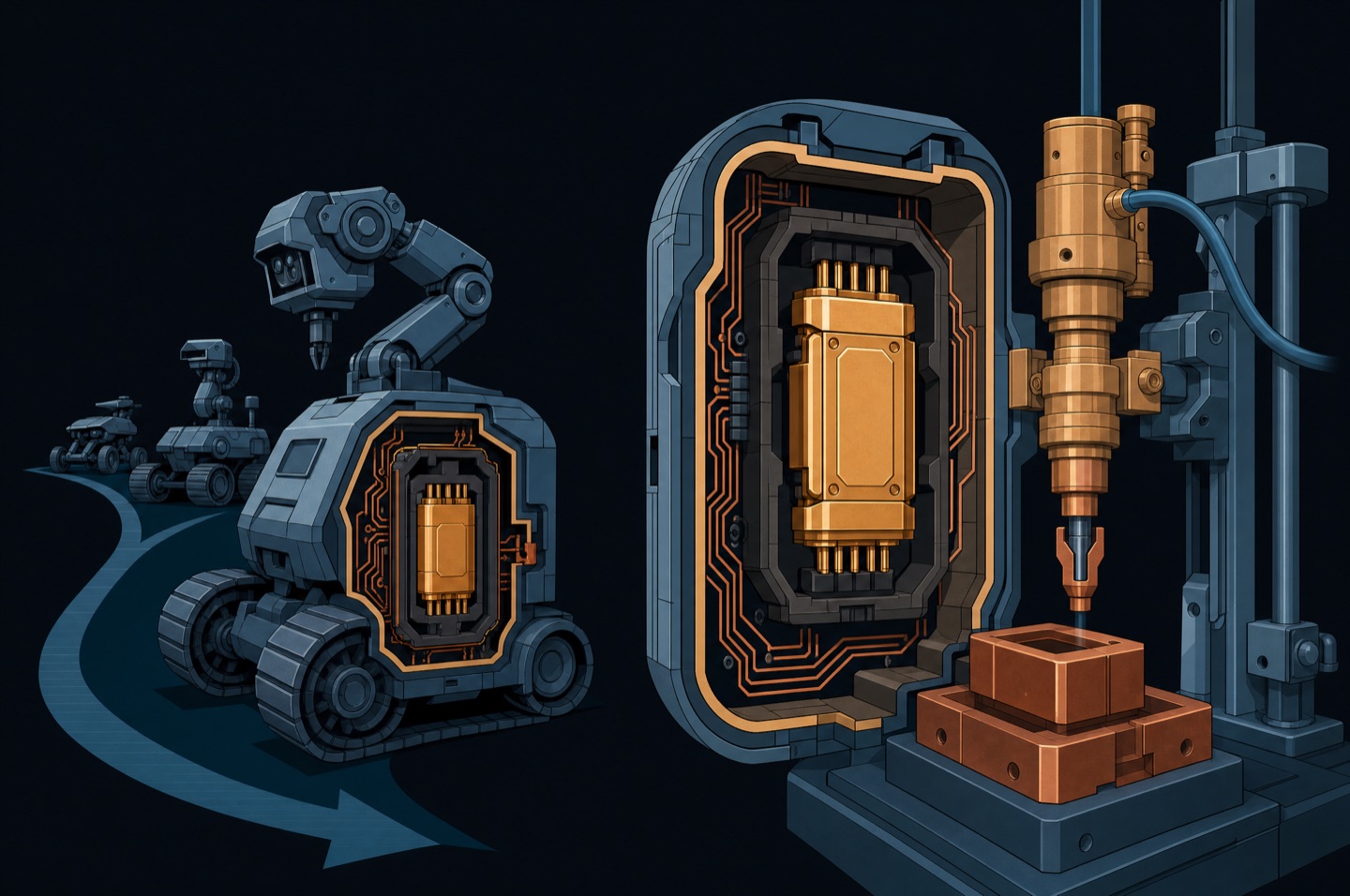
Embodied systems invert the calculation. A vehicle, a satellite, an industrial arm or a medical device may be in service for fifteen or thirty years. Its telemetry can be sensitive for the whole of that period. More pointedly, its firmware verification key is frequently set in hardware and not practically replaceable in the field, which means a fleet can outlive the assumptions its own secure boot chain was built on.
That makes this a lifecycle problem rather than a protocol upgrade. Transport security can be renegotiated. A root of trust fused into silicon cannot, and a recall is the fallback. The questions worth asking of any long-lived fleet are therefore about mechanism rather than algorithm: can the verification key be rotated at all, what happens when a signature scheme is deprecated mid-service-life, and does the bootloader have room for a larger key and signature.
Post-quantum signature schemes tend to have larger keys and signatures than the elliptic-curve primitives they replace. On a constrained microcontroller with a fixed bootloader partition, that is not a configuration change — it is a hardware constraint discovered late. It is a cheap thing to check early and an expensive thing to discover in year twelve.