Barren plateaus are why quantum machine learning keeps stalling
The obstacle is structural, not a matter of waiting for better hardware — and it deserves to be the first question asked of any QML claim.
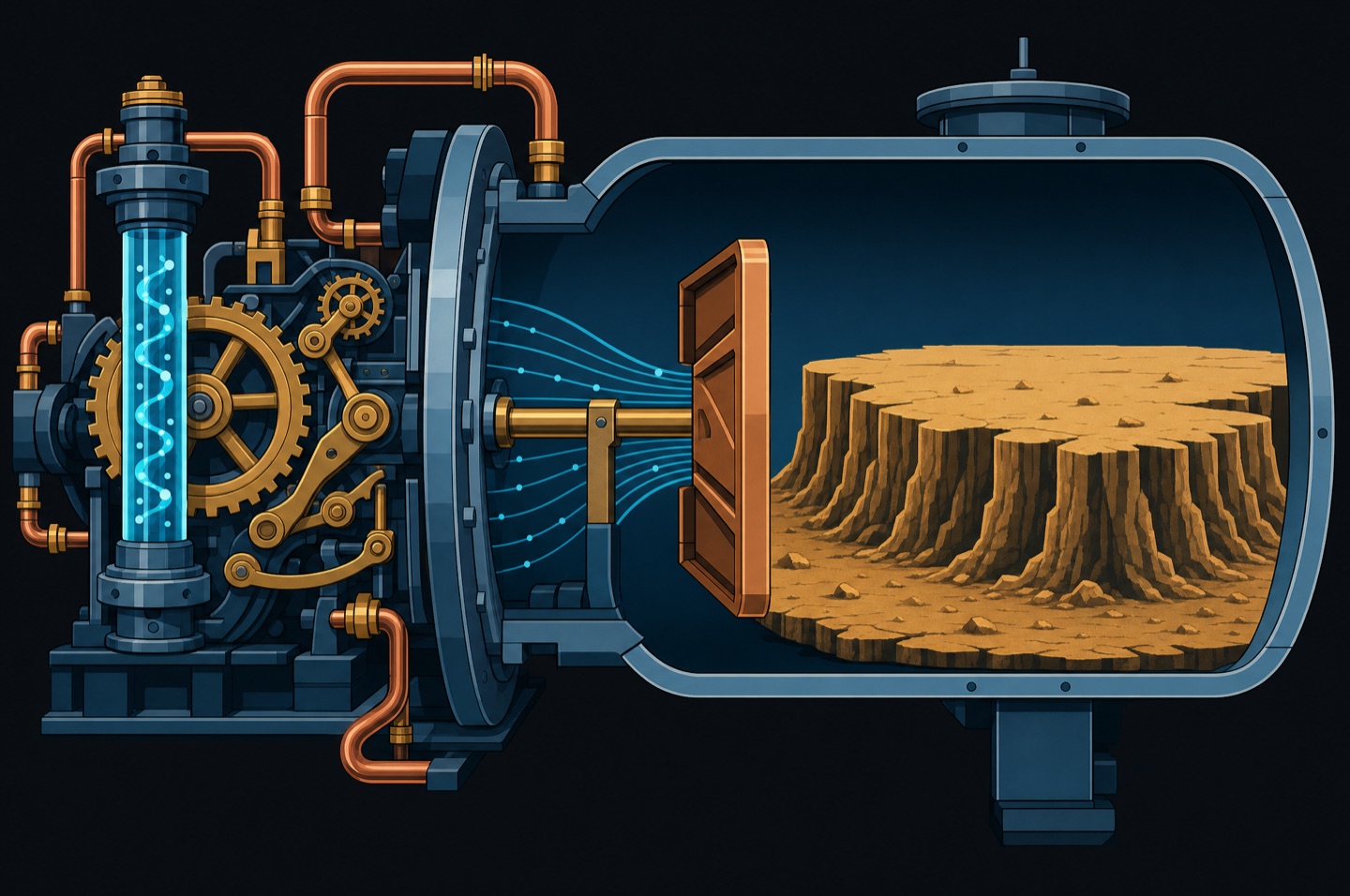
Most proposals for quantum machine learning are variational: a parameterised circuit, a cost function, a classical optimiser in the loop nudging the parameters. It is a sensible design given noisy hardware, and it has a known failure mode.
For sufficiently expressive random circuits, the gradient of the cost concentrates — its variance shrinks exponentially in the number of qubits. The optimisation landscape flattens into a plateau on which the optimiser has no signal to follow. Estimating a gradient that small requires a number of measurement shots that grows exponentially, which means the problem cannot be escaped by running longer.
The important word is exponentially. This is not a constant factor that better qubits retire. Strategies exist — structured rather than random ansätze, careful initialisation, local rather than global cost functions, shallower circuits — and some of them help. But each works by reducing expressivity or by injecting problem structure, which narrows the claim from "quantum learning" to "quantum learning, for this family of problems, with this ansatz".
That narrower claim is a perfectly respectable research programme. The reason to insist on the distinction is that the broad version — quantum computers will make machine learning faster — is repeated in places where the narrow version would not survive a follow-up question. Ask which ansatz, ask how the gradient variance behaves as qubits scale, and ask what the classical baseline is on the same data. The last question retires more claims than the first two.