Qubit counts stopped being the number that matters
Error correction changed the unit. A headline physical-qubit figure says almost nothing without the error rate it was achieved at.
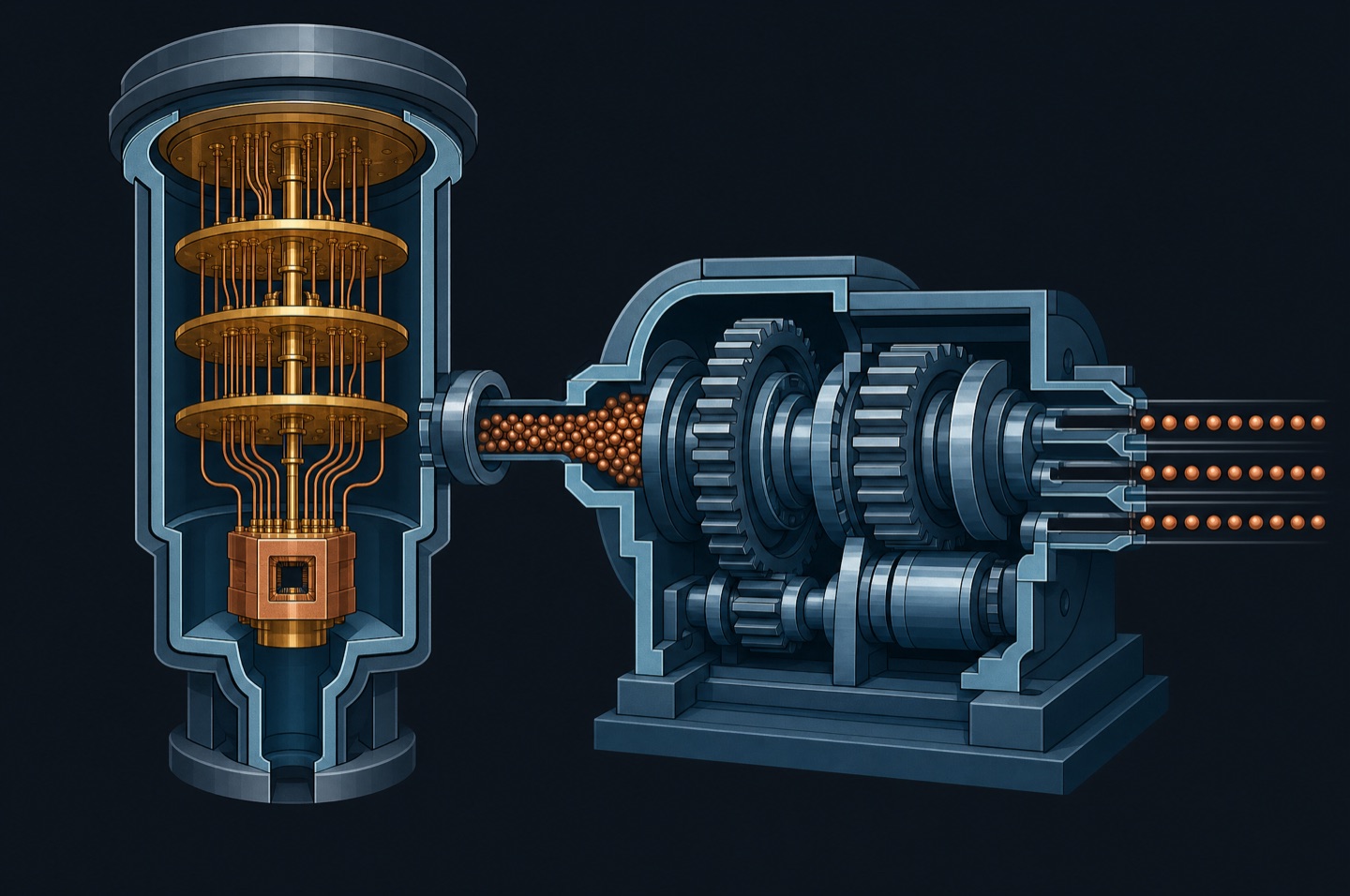
For years the qubit count was the number in the headline, and it was always a poor summary. It is now actively misleading, because the field has reorganised around error correction and the relevant unit is the logical qubit.
A logical qubit is an encoded state spread across many physical qubits, kept alive by continuous stabiliser measurement and correction. The ratio between physical and logical is not a constant — it depends on the physical error rate, the code, and the target logical error rate. Below a threshold error rate, adding physical qubits suppresses logical errors; above it, adding them makes things worse. A large device with mediocre fidelity can therefore be strictly less useful than a small device with excellent fidelity.
This is why the meaningful figures are two-qubit gate fidelity, measurement fidelity, coherence time relative to gate time, connectivity, and — increasingly — whether the machine has demonstrated that scaling the code actually reduces the logical error rate. That last demonstration is the one that separates a roadmap from a result.
For anyone reading announcements at this intersection, the practical filter is simple. A qubit count with no error rate attached is marketing. A logical error rate that improves as the code distance grows is engineering.